
Mobility Buying guide
Exercise Mats for Home Workouts
Find a mat with the right area, firmness, and surface for the movements and flooring you have.
By HealthFit.ai 4 min read
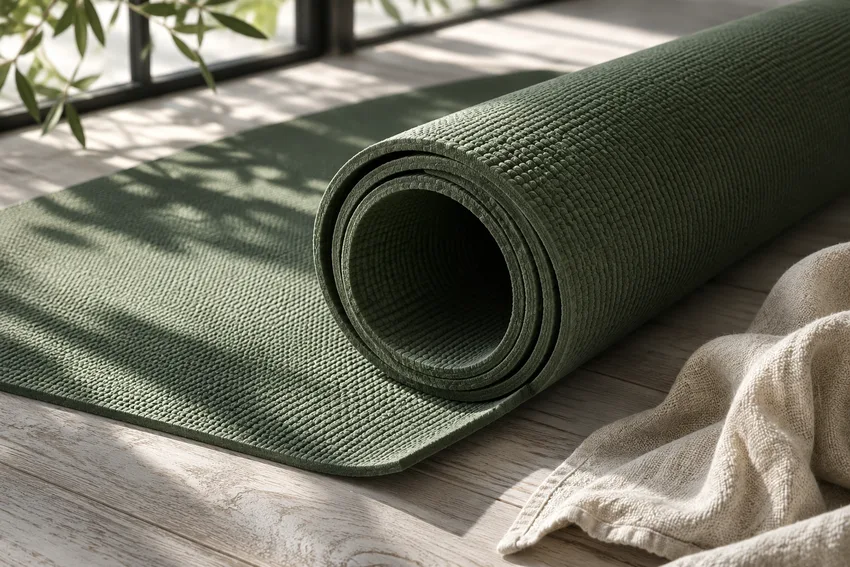
Measure the area your body uses during the workout. Then compare the surface, thickness, and care instructions for the mat you will put there. A compact roll-up mat works well for individual floor work, while a wide exercise mat may suit routines with more side-to-side movement.
Size it around movement
Tape the outline you are considering onto your floor. Lie down, reach overhead, and try the widest positions you plan to use within that outline. If a wall limits where you can extend your arms, a wider mat will only help when the room can accommodate it.
For a shared room, measure the rolled diameter and check how you will store it dry. A larger mat earns its floor space if it covers movements that spill past the edges of a standard yoga mat.
Compare firmness with thickness
Check the material as well as the measurement in millimeters. A firm mat and a soft foam mat of similar thickness can feel different under a hand or foot. If you are deciding between a cushioned exercise mat and a firmer yoga mat, compare which supports the positions or transitions that make up most of your session.
Check the surface description and the cleaning instructions. Some products specify use with bare feet or prohibit shoes. If you practice in shoes, look for a mat the manufacturer rates for that purpose.
Choose separate protection for heavy gear
A personal exercise mat serves a different role from flooring under a bench, dumbbell rack, or treadmill. For gear placement, review the equipment and flooring manufacturers’ guidance on load, movement, and surface compatibility.
Ask the mat maker about floor compatibility if you have a sensitive finish. Check whether the backing needs to stay dry and how long the material should air out or dry between uses.
Models to compare
Use the manufacturer details for current specifications, shipping, and return terms. How we research gear.
Manduka
PRO Yoga Mat 6mm
A dense mat for a regular home practice on a firm floor.
The standard version weighs 7.5 lb. Its closed-cell surface does not absorb moisture, so Manduka suggests a towel for grip during sweaty sessions.
- Thickness
- 6 mm
- Standard size
- 71 × 26 in
- Surface
- Closed-cell PVC
lululemon
The Mat 5mm
A reversible yoga mat for anyone who wants a choice of two surfaces.
The mat has a natural rubber base and carries a latex warning. The maker also recommends airing it out before the first use.
- Thickness
- 5 mm
- Size
- 71 × 26 in
- Weight
- 5.24 lb
Before you buy
- Tape out the full width and length you can use.
- Compare material, firmness, and thickness for your activity.
- Check shoe use, cleaning instructions, and floor compatibility.
- Confirm the rolled size and plan dry storage.
Common questions
Is a thicker exercise mat always more cushioned?
Thickness and material both affect how a mat feels. Compare the construction and surface for the movement you do most, especially if you shift often between floor contact and standing positions.
Should I buy a yoga mat or an equipment mat?
Choose a yoga or exercise mat for body contact. For a machine, rack, or bench, use floor protection that the equipment manufacturer supports and your flooring can accommodate.