
Mobility Buying guide
How to Compare Exercise Mat Grip
Distinguish grip on the mat from movement underneath it, and check the surface care and moisture guidance before shopping.
By HealthFit.ai 3 min read
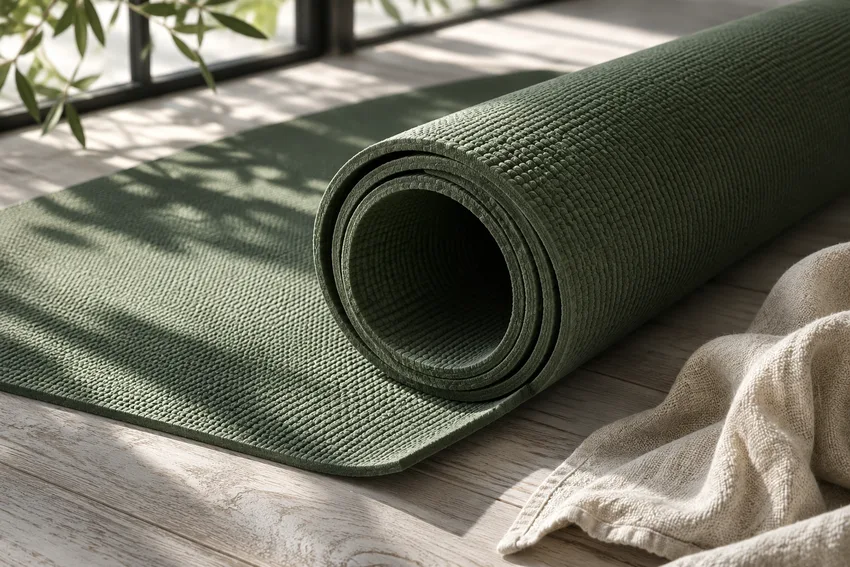
An exercise mat can feel slippery because your hands move on the top, because the mat moves on the floor, or because both happen. Identify which surface is moving before you pay for a different material or apply a cleaner.
Figure out where the slide happens
Mark the position of two corners beside the mat on a suitable floor. After basic movements, see whether the corners moved or whether only your hands changed position. A mat that drifts needs a compatible, steady floor and backing. Hands that slip while the mat stays put point toward the top surface, moisture, or residue.
Check that the mat lies flat and the floor is clean and dry before comparing. If you exercise in several rooms, check the surface you use most, then note whether the same mat behaves differently in the other space.
Compare dry grip and moisture handling
Look at what the manufacturer says about wet or dry use. A surface that holds well in a dry workout can feel different once sweat accumulates. A towel may suit some mats, especially when the maker recommends it. Confirm the expected use and cleaning method for the exact surface.
Manduka’s guide to its PRO surface describes the conditions that can affect how it feels and distinguishes it from grip-focused models. Differences within one brand are a reminder to check the model’s materials and care guide rather than relying on a general grip label.
Check cleaning, drying, and return terms together
Cleaner residue and dirt can change the way a mat feels. Use only the method approved for your mat. Give its top and underside time to dry as instructed before rolling or trying it again. Avoid abrasive treatments unless the manufacturer specifically recommends them for the exact model.
If you can try before buying, use the conditions closest to your typical workout. If you are ordering online, check whether the seller allows returns after a trial and which packaging to keep.
Models to compare
Use the manufacturer details for current specifications, shipping, and return terms. How we research gear.
Manduka
PRO Yoga Mat 6mm
A dense mat for a regular home practice on a firm floor.
The standard version weighs 7.5 lb. Its closed-cell surface does not absorb moisture, so Manduka suggests a towel for grip during sweaty sessions.
- Thickness
- 6 mm
- Standard size
- 71 × 26 in
- Surface
- Closed-cell PVC
lululemon
The Mat 5mm
A reversible yoga mat for anyone who wants a choice of two surfaces.
The mat has a natural rubber base and carries a latex warning. The maker also recommends airing it out before the first use.
- Thickness
- 5 mm
- Size
- 71 × 26 in
- Weight
- 5.24 lb
Before you buy
- Identify whether your hands, the whole mat, or both move.
- Confirm compatible backing and flooring.
- Check the model’s moisture and care guidance.
- Prefer a trial or return option when surface feel is important.
Common questions
Does a mat that feels grippy when dry stay grippy when wet?
Check the exact model. Surface material, sweat, and the manufacturer’s cleaning or towel instructions can change what works for your routine.
Should I use household cleaner to remove a slippery film?
Check the manufacturer’s approved cleaners first. Methods vary depending on the surface and backing, and residue or an incompatible cleaner may make the problem worse.