Mobility Buying guide
What Thickness Exercise Mat Do You Need?
Compare thin, medium, and thick exercise mats for standing balance, floor work, and shared spaces.
By HealthFit.ai 3 min read
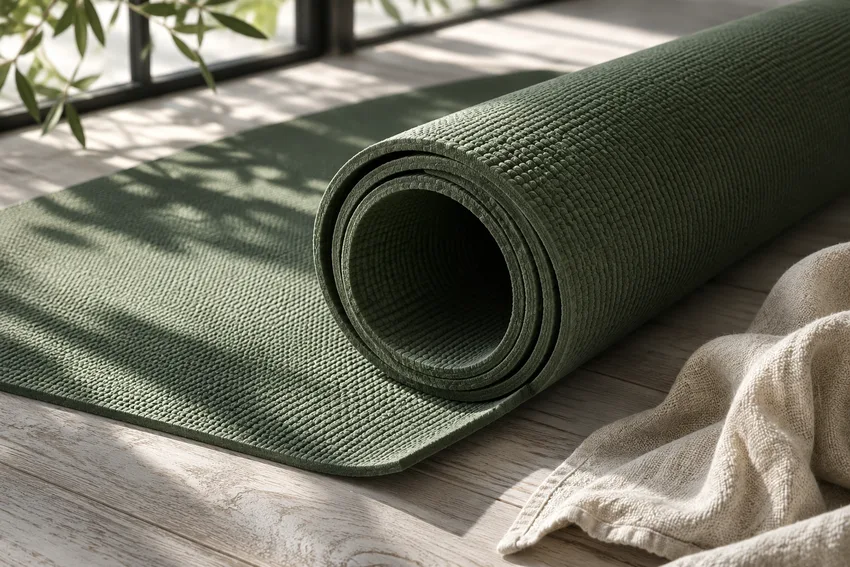
Choose mat thickness around the positions you spend the most time in. A cushion that feels pleasant during seated work may compress more than you want when you stand on one foot. Use the millimeter rating to narrow the options, then compare the material and the floor it will sit on.
Start with thin, medium, or extra cushioned
Use these thickness bands as shopping filters. A thin mat around 2 to 4 mm keeps the surface close to the floor and usually makes a smaller roll. Start here if you stand for most of the session or regularly pack the mat away. On tile or concrete, try a sample if you also spend time seated or kneeling.
A mat around 5 to 6 mm gives you a middle option for mixed floor and standing work. The Manduka PRO is a 6 mm closed-cell PVC mat. lululemon specifies a natural rubber base and two usable surfaces for its 5 mm mat. Those construction differences are worth comparing alongside the single millimeter between them.
If you spend most of your session lying down or seated on a hard floor, compare thicker pads around 8 mm and up. Check how easily the foam compresses under a planted hand or foot and whether the mat still rolls into the storage space you have.
Use your floor and routine to break a tie
Imagine a session with fifteen minutes standing, ten minutes on the floor, and several transitions between them. On firm wood, a dense mid-thickness mat is a sensible starting point. If you already own a firm mat and only a short kneeling segment calls for extra cushioning, a removable kneeling pad lets you change that one part of the setup.
On carpet, try the mat on the actual carpet pile. The floor underneath can change how much the surface gives and whether edges stay flat. On hard flooring, look at the backing and check the floor maker’s care guidance.
Check what a product listing can tell you
The useful details are the material, floor-contact surface, allowed footwear, and return terms. If you can handle a sample, press down with your palm, step onto it, then see how quickly the surface rebounds. Compare dry grip and changes when you shift your weight.
Check the carry weight as well as thickness when the mat goes into a closet between workouts. Two mats of the same length and width can have very different carry weights because of their materials.
Models to compare
Use the manufacturer details for current specifications, shipping, and return terms. How we research gear.
Manduka
PRO Yoga Mat 6mm
A dense mat for a regular home practice on a firm floor.
The standard version weighs 7.5 lb. Its closed-cell surface does not absorb moisture, so Manduka suggests a towel for grip during sweaty sessions.
- Thickness
- 6 mm
- Standard size
- 71 × 26 in
- Surface
- Closed-cell PVC
lululemon
The Mat 5mm
A reversible yoga mat for anyone who wants a choice of two surfaces.
The mat has a natural rubber base and carries a latex warning. The maker also recommends airing it out before the first use.
- Thickness
- 5 mm
- Size
- 71 × 26 in
- Weight
- 5.24 lb
Before you buy
- Choose a thickness band based on your longest activity.
- Check material and firmness before judging cushion by millimeters.
- Confirm approved footwear and compatibility with your floor.
- Measure a suitable storage spot and check the carry weight.
Common questions
Is a 5 mm mat thick enough for home exercise?
It is a reasonable first option for a mix of standing and floor work. If possible, try it on the floor you use and check how much it compresses under your hands and feet.
Should I buy a thicker mat just for kneeling?
If you otherwise like your mat, try a removable pad for the kneeling portion. It keeps the rest of the mat available for movements where you prefer a firmer surface.