Strength Setup guide
How to Protect Floors in a Small Home Gym
Plan floor protection for dumbbells, benches, and compact cardio gear on hardwood, vinyl, or concrete.
By HealthFit.ai 3 min read
Map where your gear rests, where it moves, and where weights meet the floor. Those are three separate wear points in a small home gym. Check your floor’s care guide and the equipment instructions before choosing a mat, tile, or platform.
Check the finish before choosing the backing
Identify your flooring and, if possible, the product or finish. Shaw’s hardwood care guidance warns about discoloration from some rubber- or foam-backed mats and recommends wide supports where heavy objects can indent the surface. Armstrong’s residential vinyl guidance also cautions about discoloration from rubber or latex backing. Ask the flooring maker about the exact material you plan to put down.
If you rent and cannot identify the floor, ask the building manager or installer before laying down a permanent covering. Tell them what the equipment weighs, whether it moves, and how long the protection will sit in place. Get the answer for both the exposed backing and any layer between it and the floor.
Cover the contact points and the path
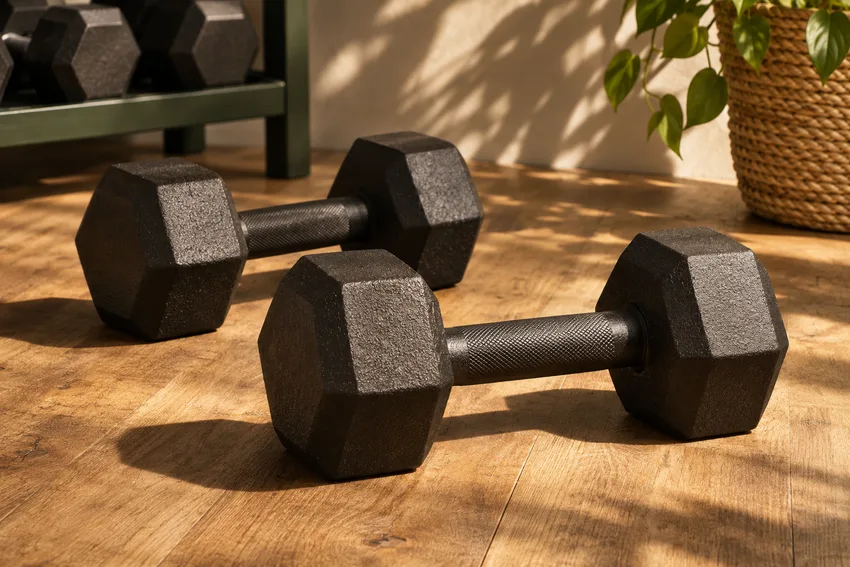
For a bench and dumbbell pair, measure the full stance of the bench and the spots where both dumbbells rest between sets. If you put them down on either side, protection cut exactly to the bench’s outline leaves the main wear points uncovered. Map the whole working area and locate edges or seams away from where a bench foot or dumbbell lands.
For a walking pad you move often, check the manual for the permitted surface, clearance, and transport position. Cover the operating footprint if the manufacturer calls for a mat. Then consider how the wheels cross edges between the storage spot and the operating spot. A thicker tile can become a ledge along that route.
Match the protection to the load
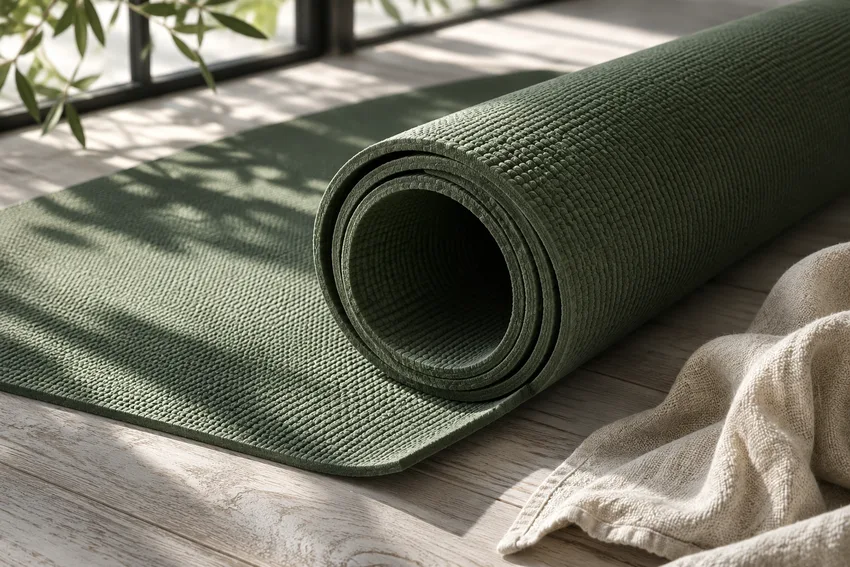
A personal exercise mat is meant for contact with your body. Check an equipment mat or platform against the weight and contact area of the gear that sits on it. For reference, Rogue lists its modular rubber Power Platform at 72 by 90 inches. That is an example of a dedicated training surface with a sizable footprint to plan around, even before checking floor compatibility or site requirements.
Compare the maker’s directions for installation, surface preparation, and cleaning. Before use, check that equipment stands level, the surface lies flat, and the edges stay out of walkways. If dropping weights or mounting heavy equipment is part of the plan, confirm that the floor and installation can support the intended loads.
Setup checklist
- Identify the exact floor material and confirm an approved backing.
- Measure the gear’s outer contact points and its transport route.
- Keep tile seams and edges away from feet and rolling paths.
- Check equipment stability, load compatibility, and care instructions.
Common questions
Can I put rubber gym tiles directly on hardwood or vinyl?
Check the floor manufacturer’s guidance for the exact finish and backing. Some floors are susceptible to discoloration, especially where a covering stays in contact for long periods.
Will an exercise mat protect a floor from a dropped dumbbell?
Choose protection specifically rated for impact from the intended equipment and confirm the floor can handle that use. A personal exercise mat alone is designed for a different load.