
Cardio Buying guide
Walking Pad Electricity Use and Outlet Checks
Read your walking pad’s power instructions and estimate running costs from measured watt-hours and your electricity rate.
By HealthFit.ai 3 min read
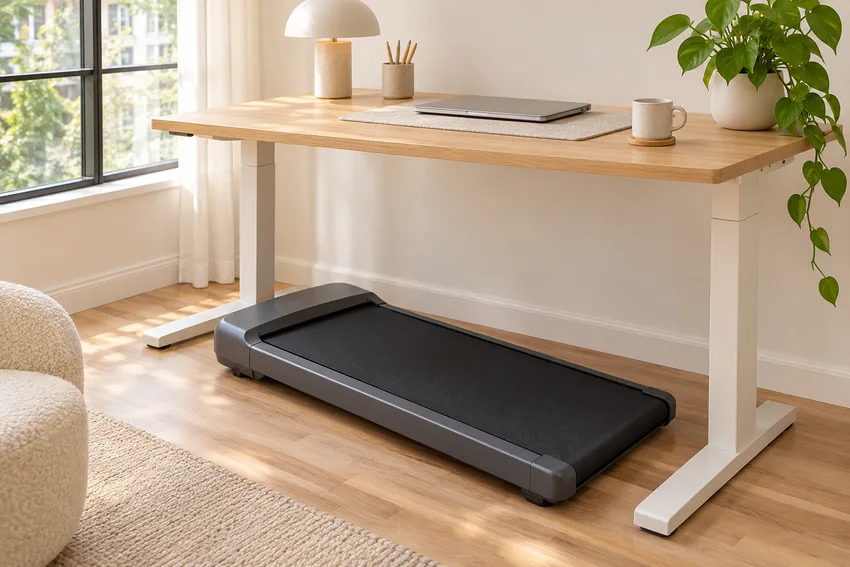
The power label helps you check the equipment against the outlet requirements. Actual running cost depends on energy used during your sessions. Keep those two calculations separate so you do not mistake the rated load for your average consumption.
Read the rating and outlet instructions first
Check the voltage, frequency, and plug requirements in the manual for the exact model. Follow any instructions on grounding, dedicated outlets, or accessories. If you are unsure whether the current outlet is suitable, get it checked before buying the machine.
Mark where the equipment sits and how far it is from the outlet. Account for routing the supplied cord away from the deck, doors, and walking paths. Do not assume you can solve a reach problem with an extension cord or power strip.
Use energy consumption for your running cost
If the manufacturer permits a correctly rated plug-in meter or other measurement, record energy across a typical session. Check the meter’s instructions and capacity. If you cannot measure safely, ask the maker for consumption data under conditions close to yours.
As an example, a session with an average draw of 300 watts for one hour uses 0.3 kilowatt-hours. Twenty sessions at that example draw use 6 kilowatt-hours. At a hypothetical electricity rate of $0.20 per kilowatt-hour, that part of the monthly usage costs $1.20. Substitute your measurements, walking time, and local rate.
Keep standby and charging separate
If the manual permits the equipment to remain connected between sessions, check what it says about standby and shutoff. Track standby consumption separately if it matters in your household. A label often reflects equipment ratings rather than energy over an entire day.
For comparisons, use the same session length and similar operating conditions. Price the complete setup, including any equipment the manufacturer requires for installation. Ask the seller when part of the setup is unclear.
Before you buy
- Read the exact model’s power and outlet requirements.
- Check the supplied power lead reaches without crossing the deck or walkways.
- Use measured or manufacturer-provided energy data for cost estimates.
- Multiply kilowatt-hours by the applicable electricity rate.
Common questions
Can I use a motor’s maximum wattage as the typical draw?
A maximum rating serves a different purpose. Use energy measured during representative sessions or ask the manufacturer for typical consumption data.
Does the monthly calculation include every charge on my electricity bill?
Multiplying usage by the per-kilowatt-hour rate estimates that portion of the cost. Fixed monthly fees and time-varying rates are separate considerations.