
Cardio Setup guide
Will a Walking Pad Be Too Loud for an Apartment?
Assess motor noise, footfall vibration, and floor compatibility before setting up a walking pad in a shared building.
By HealthFit.ai 3 min read
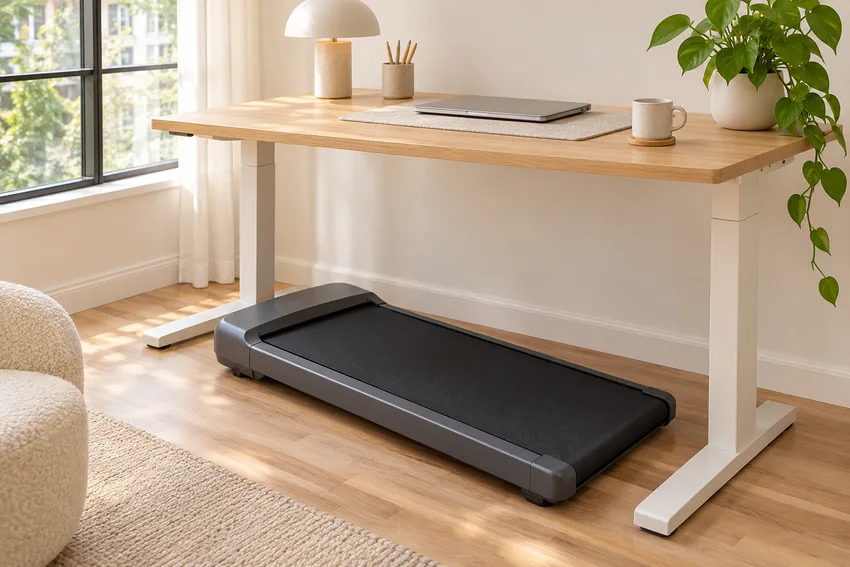
A walking pad can be quiet beside your desk and still send a thump to the room below. The motor and belt make sound in the room. Each footfall can also send vibration through the machine into the floor. If apartment noise is the main concern, plan a brief test at your intended pace during the return window.
Ask what a noise figure actually measured
For a published sound reading to help you compare models, look for the pace, whether someone was walking, the floor under the machine, and how far away the measurement was taken. A number measured near an unloaded unit tells you about those conditions. It gives little information about footfall in the apartment below.
The National Research Council of Canada’s floor research shows why building construction matters. What reaches the room below depends on the floor assembly and covering as well as the impact itself. A label such as “quiet motor” addresses only part of what neighbors might hear.
Use a floor setup the manufacturer allows
Start with a firm, level placement and the clearances in the manual. If the maker allows an equipment mat for your floor, choose one that supports the entire footprint and leaves vents and moving parts clear. A mat may protect the finish and change the vibration at the contact points. Its effect in the room below varies by building.
When a pad rocks, slips, or develops an unusual sound, stop the session and check the setup instructions. Follow the model’s maintenance schedule and contact the seller if noise suggests a fault. Soft rugs or layers of padding can make a setup less stable. Use a surface approved for the machine.
Run a short test during the return window
Check the building’s quiet hours before the first use. Pick a permitted time and run a short test at the speed and in the spot you plan to use. If a housemate or willing neighbor can listen nearby, ask whether they hear a steady hum or repeated thumps. A phone reading can help compare two conditions from the same spot, but a reading beside the pad is a poor substitute for feedback from the room below.
For example, if your neighbor hears thumps mainly when you increase pace, repeat the test at your usual slower desk pace. If regular use still causes a disturbance, the most useful decision may be to change where or when you use the pad, or return it while you can.
Setup checklist
- Read the building’s quiet hours and any equipment rules.
- Check the model’s approved surfaces, maintenance schedule, and return terms.
- Use a stable setup and test at the pace you actually plan to walk.
- When possible, compare what someone hears below with the sound heard in your room.
Common questions
Will a treadmill mat keep downstairs neighbors from hearing me?
A suitable mat may reduce some vibration where the machine meets the floor. Transmission to another room still depends on the floor assembly, walking pace, and installation.
Is a quiet motor label enough to compare apartment noise?
Check whether the brand tests the machine with a person walking and describes the conditions. Footfall and floor construction also affect what a neighbor hears.